

Mako SmartRobotics™
Robotic-Assisted Joint Replacement
Columbia Memorial Hospital is the only hospital on the Oregon and Washington Coasts where you can have robotic-assisted joint replacement with Mako SmartRobotics™. Hear from a CMH patient who recently experienced the Mako difference with total joint replacement:
We understand that knowing what to expect from your joint replacement experience is important to you. As you are reading through this material, please reach out to our experts at the CMH-OHSU Health Orthopedic Clinic to discuss if you have additional questions. All of our orthopedic surgeons are able to perform robotic-assisted joint replacements.
 Each patient is unique and can experience joint pain for different reasons. It’s important to talk to us about the reason for your joint pain so you can understand the treatment options available to you.
Pain from arthritis and joint degeneration can be constant or come and go, occur with movement or after a period of rest, or be located in one spot or many parts of the body. It is common for patients to try medication and other conservative treatments to treat their knee or hip pain.
If you haven’t experienced adequate relief with those treatment options, you may be a candidate for Mako SmartRobotics™ for total knee, total hip, or partial knee replacement.
How Mako SmartRobotics™ works
Mako SmartRobotics™ is an innovative solution for many suffering from painful arthritis of the knee or hip. Mako uses 3D CT-based planning software so your surgeon can know more about your anatomy to create a personalized joint replacement surgical plan. This 3D model is used to pre-plan and assist your surgeon in performing your joint replacement procedure.
In the operating room, your surgeon follows your personalized surgical plan while preparing the bone for the implant. The surgeon guides Mako’s robotic arm within the predefined area, and Mako’s AccuStop™ technology helps the surgeon stay within the planned boundaries that were defined when the personalized preoperative plan was created. By guiding your doctor during surgery, Mako’s AccuStop™ technology allows your surgeon to cut less by cutting precisely what’s planned to help protect your healthy bone.
It’s important to understand that the surgery is performed by an orthopedic surgeon, who guides Mako’s robotic arm during the surgery to position the implant in the knee and hip joints. Mako SmartRobotics™ does not perform surgery, make decisions on its own or move without the surgeon guiding it. Mako SmartRobotics™ also allows your surgeon to make adjustments to your plan during surgery as needed.
Total knee vs. partial knee replacement
Based on the severity of the arthritis in the knee, total or partial knee replacement may be recommended by a surgeon. Both procedures involve the orthopedic surgeon guiding Mako’s robotic arm to remove diseased bone and cartilage.

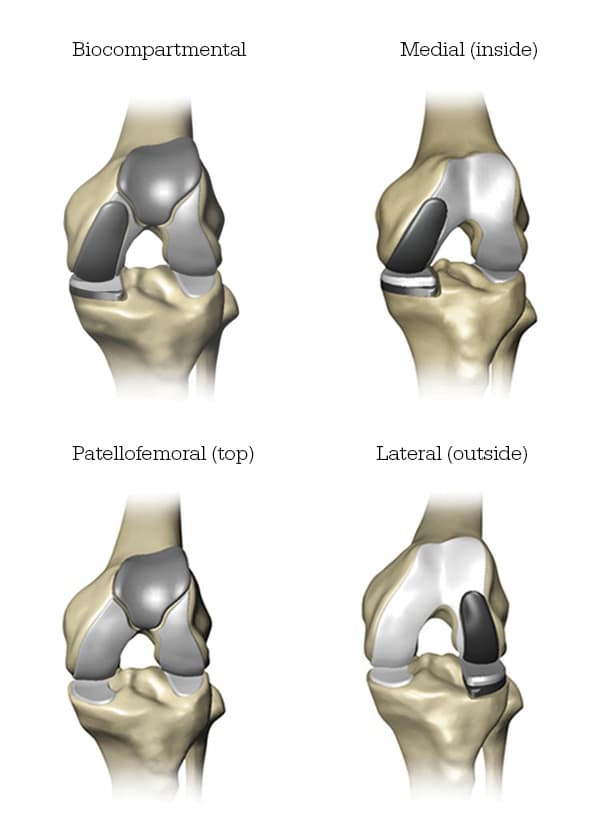
- Mako SmartRobotics™ for partial knee replacement is a treatment option for adults living with early- to midstage osteoarthritis (OA) that has not yet progressed to all three compartments of the knee. Depending on where the arthritis affects the knee, patients may have an implant inserted in any of the following areas:
- In a unicondylar knee replacement, only one area (or compartment) of the joint is replaced.
- A patellofemoral knee replacement replaces the kneecap (or patella) and the grove at the lower end of the thighbone (or femur).
- A bicompartmental knee replacement affects two compartments of the knee – the inside (medial) and knee cap.
- In comparison, Mako SmartRobotics™ for total knee replacement is a treatment option for adults living with mid- to late-stage osteoarthritis of the knee. With a Mako total knee replacement, the entire knee joint is replaced, and the surgeon inserts a Triathlon total knee implant. With over a decade of clinical history, Triathlon knee replacements are different than traditional knee replacements because they are designed to work with the body to promote natural-like circular motion.
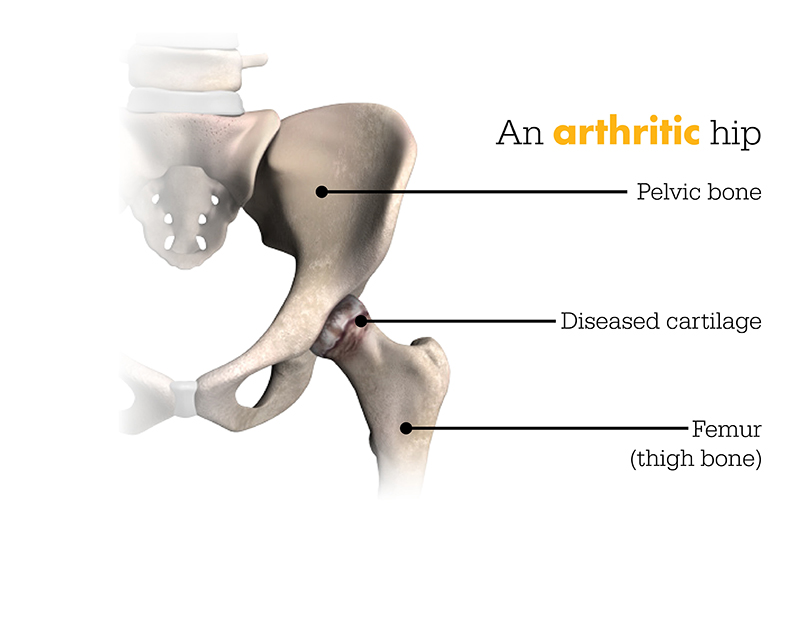
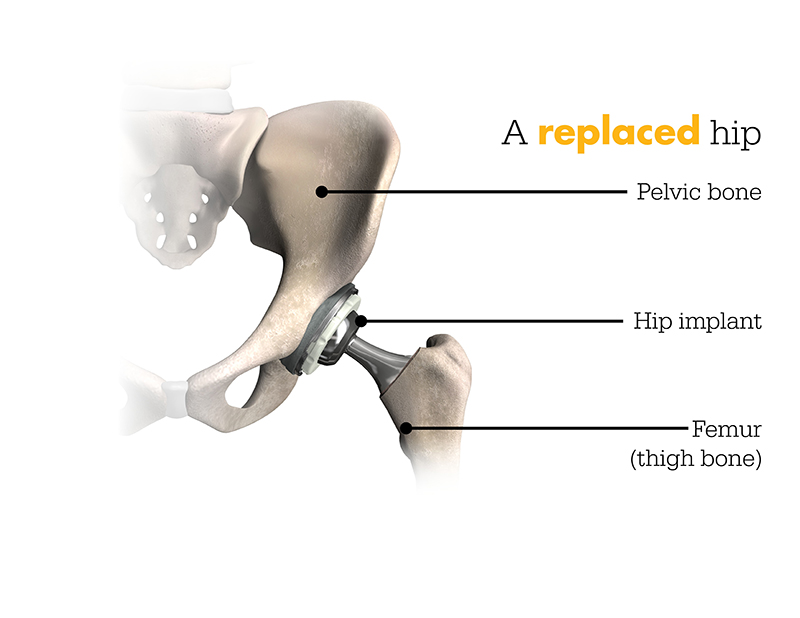
- Mako SmartRobotics™ for total hip replacement is intended for patients who suffer from noninflammatory or inflammatory degenerative joint disease (DJD). Some forms of DJD include osteoarthritis (OA), post-traumatic arthritis, rheumatoid arthritis (RA), avascular necrosis (AVN) and hip dysplasia.
Total Joint Replacement classes
Did you know? CMH offers a free, one-day class to help you prepare for total joint replacement surgery and recovery.
What you will learn:
- Home set-up and recovery.
- What to anticipate at the hospital.
- Post-surgery goals and how to reach them.
- Pain management techniques and expectations.
Attending the class is optional but recommended to help you feel more confident and prepared for surgery. Click here to read more details about the class and see upcoming class dates.